Residuos como nuevas materias primas: aprovechando el suero de queso
Waste as new raw materials: harnessing cheese whey
DOI:
https://doi.org/10.29105/cienciauanl.v29.140.467Palabras clave:
residuos orgánicos, biotransformación, economía circular, suero de queso, fermentación. organic waste, biotransformation, circular economy, cheese whey, fermentation.Resumen
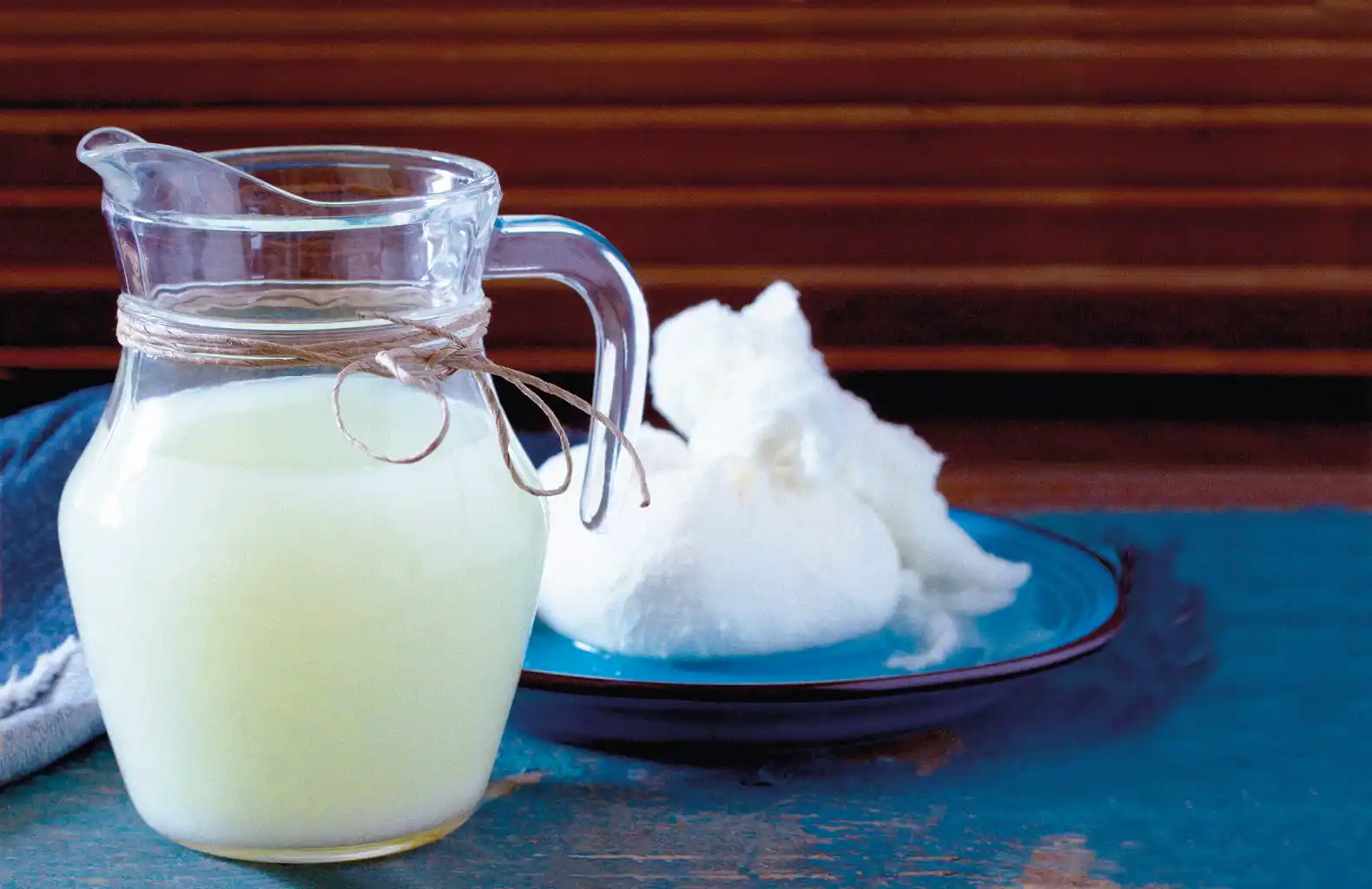
El suero de queso es el principal subproducto de la industria láctea y contiene hasta 55% de los nutrientes de la leche. Debido a su composición rica en lactosa, ácido láctico y proteínas, este residuo tiene una alta demanda química (DQO) y bioquímica de oxígeno (DBO). Por lo anterior, un manejo inadecuado genera un impacto ambiental negativo. Se han propuesto diversos procesos para su tratamiento, entre los cuales resalta la fermentación, ya que se pueden obtener alimentos funcionales, probióticos y hasta suplementos. En este sentido, lo que se considera como un residuo problemático puede convertirse en una materia prima valiosa para diversas industrias mientras se contribuye a la sostenibilidad.
Abstract
Cheese whey is the main by-product of the dairy industry and contains up to 55% of the nutrients found in milk. Due to its composition rich in lactose, lactic acid, and proteins, this residue exhibits high chemical oxygen demand (COD) and biochemical oxygen demand (BOD). Therefore, improper management has a negative environmental impact. Various processes have been proposed for its treatment, among which fermentation stands out as it can be used to obtain functional foods, probiotics, and even supplements. In this sense, what is considered problematic waste can become a valuable raw material for various industries while contributing to sustainability.
Descargas
Citas
Dawood, Mahmoud A.O., Koshio, Shunsuke. (2020). Application of fermentation strategy in aquafeed for sustainable aquaculture. Reviews in Aquaculture, 12(2), 987-1002. https://doi.org/10.1111/raq.12368 DOI: https://doi.org/10.1111/raq.12368
Gomes, Leonardo R.R., Moraes, Flávia de S.A., Evangelista, Letícia M., et al. (2021). Fermented soybean beverage improves performance and attenuates anaerobic exercise oxidative stress in Wistar rat skeletal muscle. PharmaNutrition, 16, 100262. https://doi.org/10.1016/j.phanu.2021.100262 DOI: https://doi.org/10.1016/j.phanu.2021.100262
López Barreto, Ricardo E., Becerra Jiménez, Mónica L., Balaguera López, Helber E., et al. (2021). Aislamiento, identificación y evaluación de levaduras con potencial probiótico in vitro provenientes del suero de queso Paipa. Ciencia y Tecnología Agropecuaria, 22(2). https://doi.org/10.21930/rcta.vol22_num2_art:1833 DOI: https://doi.org/10.21930/rcta.vol22_num2_art:1833
Hernández-Carranza, P., Fierro-Corona, G., Tapia-Maruri, D., et al. (2023). Bioactive Edible Films Based on LAB-Fermented Whey Solution and Potato Starch: Characterization and Storage Behavior. Food and Bioprocess Technology, 16, 3045-3056. https://doi.org/10.1007/s11947-023-03115-z DOI: https://doi.org/10.1007/s11947-023-03115-z
Lácteos Franz. (2024, 18 de diciembre). Grado de contaminación del suero lácteo. https://lacteosfranz.org/grado-de-contaminacion-del-suero-lacteo/
Lavelli, Vera, Beccalli, Matteo P. (2022). Cheese whey recycling in the perspective of the circular economy: Modeling processes and the supply chain to design the involvement of the small and medium enterprises. Trends in Food Science & Technology, 126, 86-98. https://doi.org/10.1016/j.tifs.2022.06.013 DOI: https://doi.org/10.1016/j.tifs.2022.06.013
Lv, Jing, Guo, Lijuan, Chen, Binxu, et al. (2022). Effects of different probiotic fermented feeds on production performance and intestinal health of laying hens. Poultry Science, 101(2), 101570. https://doi.org/10.1016/j.psj.2021.101570 DOI: https://doi.org/10.1016/j.psj.2021.101570
Maragkoudakis, Petros, Vendramin, Veronica, Bovo, Barbara, et al. (2016). Potential use of scotta, the by-product of the ricotta cheese manufacturing process, for the production of fermented drinks. Journal of Dairy Research, 83(1), 104-108. https://doi.org/10.1017/S002202991500059X DOI: https://doi.org/10.1017/S002202991500059X
Poništ, Juraj, Dubšíková, Veronika, Schwarz, Marián, et al. (2021). Methods of processing whey waste from dairies. A review. Environment Protection Engineering, 47(4). https://doi.org/10.37190/epe210405 DOI: https://doi.org/10.37190/epe210405
Ramos-Romero, Steven, Gavilanes-Terán, Irene, Idrovo-Novillo, Julio, et al. (2025). Cheese Whey Characterization for Co-Composting with Solid Organic Wastes and the Agronomic Value of the Compost Obtained. Agriculture, 15(5), 513. https://doi.org/10.3390/agriculture15050513 DOI: https://doi.org/10.3390/agriculture15050513
Robledo-Márquez, K., Ramírez, V., González-Córdova, A. F., et al. (2021). Research opportunities: Traditional fermented beverages in Mexico. Cultural, microbiological, chemical, and functional aspects. Food Research International, 147, 110482. https://doi.org/10.1016/j.foodres.2021.110482 DOI: https://doi.org/10.1016/j.foodres.2021.110482
Velázquez-López, Arturo, Covatzin-Jirón, David, Toledo-Meza, María D., et al. (2018). Bebida fermentada elaborada con bacterias ácido lácticas aisladas del pozol tradicional chiapaneco. CienciaUAT, 13(1), 165-178. https://doi.org/10.29059/cienciauat.v13i1.871 DOI: https://doi.org/10.29059/cienciauat.v13i1.871
Wang, Cheng, Wei, Siyu, Xu, Bocheng, et al. (2021). Bacillus subtilis and Enterococcus faecium co-fermented feed regulates lactating sow’s performance, immune status and gut microbiota. Microbial Biotechnology, 14(2), 614-627. https://doi.org/10.1111/1751-7915.13672 DOI: https://doi.org/10.1111/1751-7915.13672
Zotta, Teresa, Solieri, Lisa, Iacumin, Lucilla, et al. (2020). Valorization of cheese whey using microbial fermentations. Applied Microbiology and Biotechnology, 104(7), 2749-2764. https://doi.org/10.1007/s00253-020-10408-2 DOI: https://doi.org/10.1007/s00253-020-10408-2
Publicado
Cómo citar
Número
Sección
Licencia
Derechos de autor 2026 Valeria Caltzontzin Rabell, David Gael Zamorano-Maldonado, Carlos Eduardo Guzmán Martínez

Esta obra está bajo una licencia internacional Creative Commons Atribución 4.0.
Datos de los fondos
-
Universidad Autónoma de Querétaro
Números de la subvención FONFIVE 2024